Description
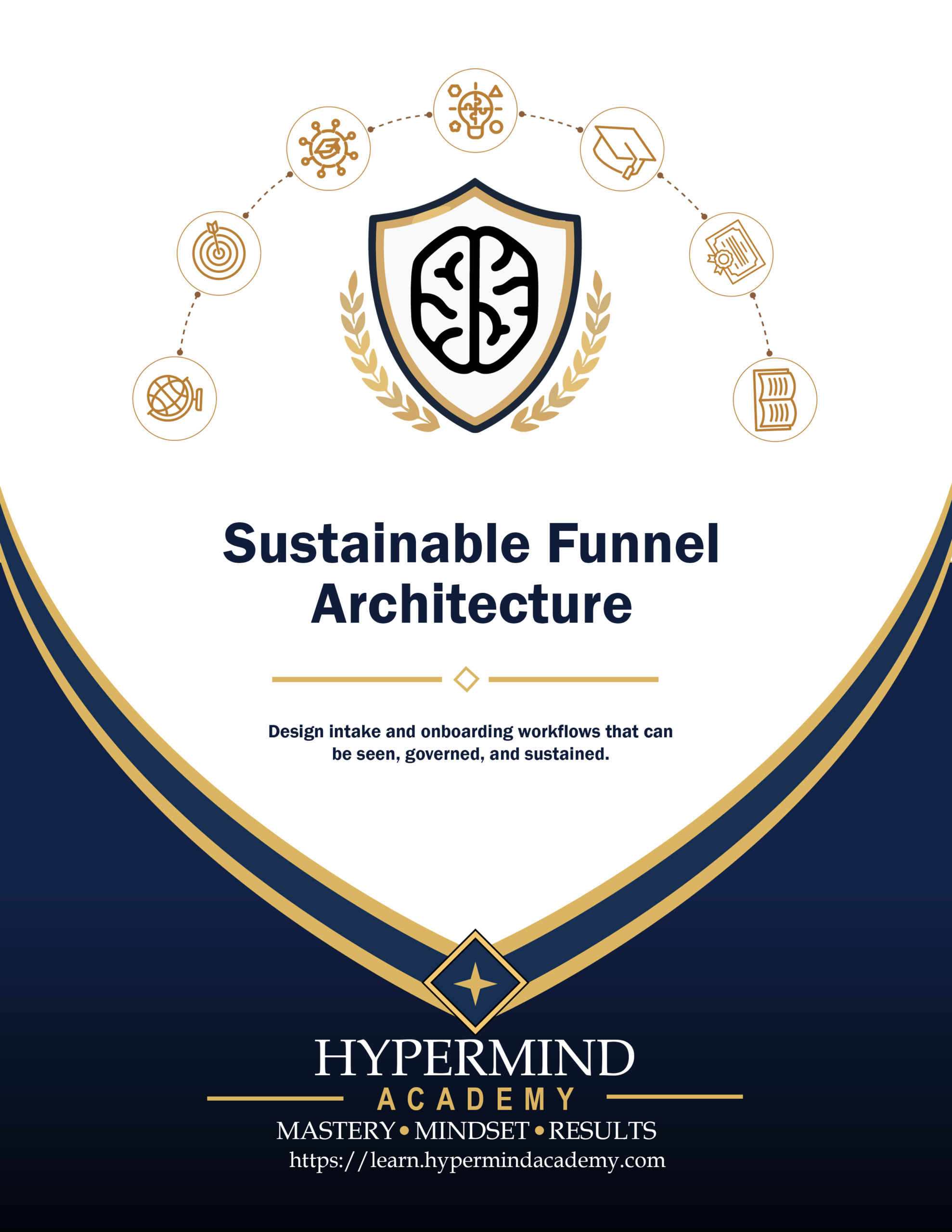
Design sustainable intake and onboarding workflows that strengthen operational visibility, governance alignment, and long-term maintainability.
–
Publication Date – Oct 23, 2026
Language – English
ISBN – Not yet Issued
Category – Business & Economics
Copyright – All Rights Reserved – Standard Copyright License
Language – English
ISBN – Not yet Issued
Category – Business & Economics
Copyright – All Rights Reserved – Standard Copyright License
Author: MD Lehman PhD
Pages – 104
Binding Type – eBook / EPUB
Interior Color – Color
Dimensions – US Letter (8.5 x 11 in / 216 X 279 mm)
Copyright Year – 2026
Pages – 104
Binding Type – eBook / EPUB
Interior Color – Color
Dimensions – US Letter (8.5 x 11 in / 216 X 279 mm)
Copyright Year – 2026
Hypermind Academy Course Companion – https://learn.hypermindacademy.com/courses/sustainable-funnel-architecture/